
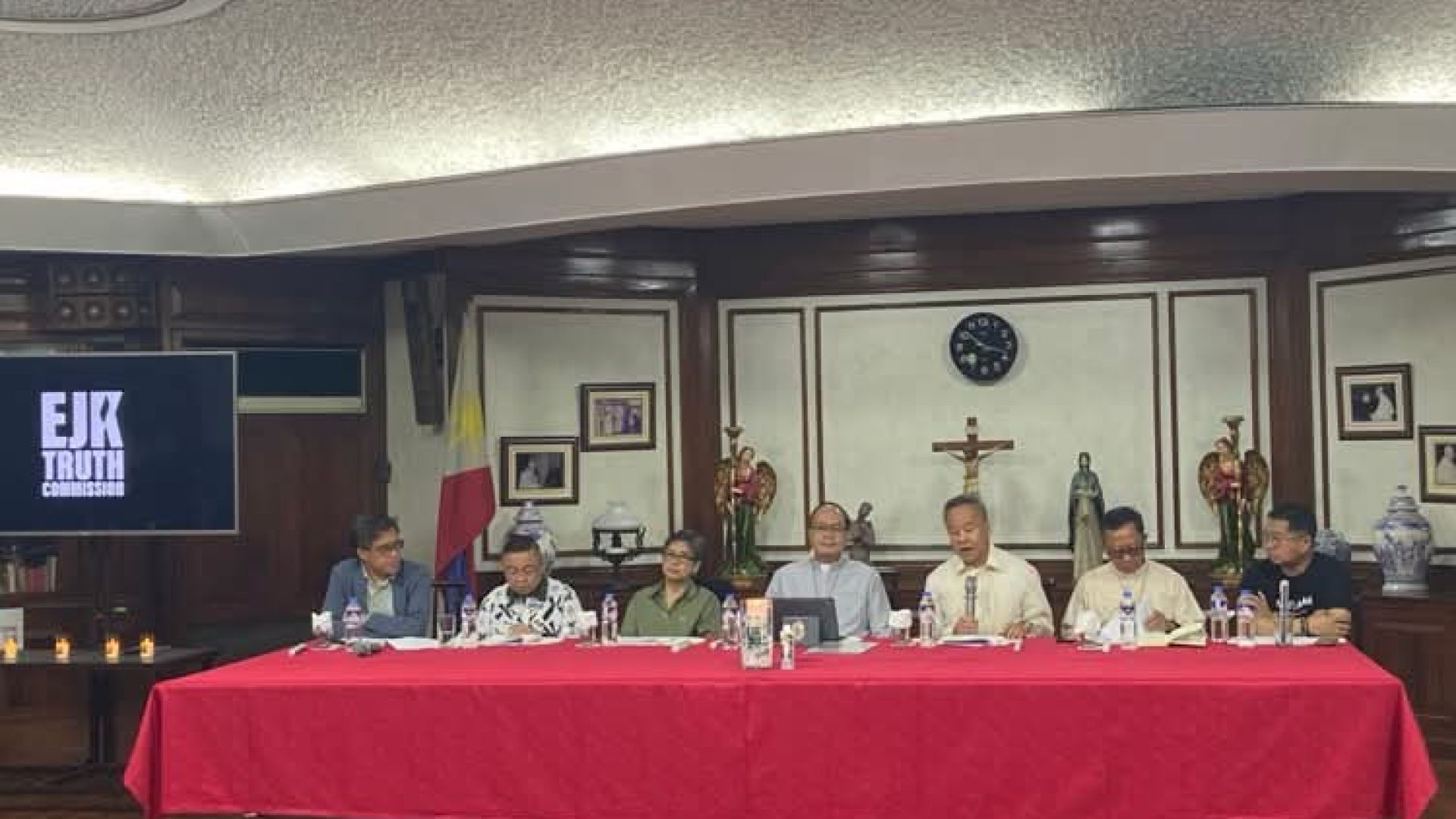






In a significant step toward truth and accountability, the EJK Truth Commission was formally launched today as an independent, civilian-led body committed to documenting extrajudicial killings (EJKs) and related abuses in the Philippines.

More than just a formal initiative, the Commission represents a collective effort to honor the stories of victims, survivors, and families—many of whom have spent years searching for answers, justice, and healing.
A Decade of Pain, A Call for Truth
The launch comes nearly ten years after drug war-related killings escalated nationwide in 2016. While the Commission acknowledges that such violence predates this period, the scale and persistence of recent years have deeply impacted thousands of Filipino families.
At its core, the Commission seeks to build a credible and verified public record—not to replace the courts or assign guilt, but to ensure that truth is preserved and acknowledged.
“This is about making sure stories are heard, verified, and remembered,” shared Atty. Raul Pangalangan, who serves as Chairman and Commissioner for Legal Affairs and Due Process.
Guided by Integrity and Compassion
The Commission will be guided by Cardinal Pablo “Ambo” David as Adviser, offering moral and institutional guidance to uphold integrity, independence, and public trust. His role is seen as crucial in safeguarding the Commission’s mission—especially in areas such as survivor protection, due process, and confidentiality.
A Diverse Panel of Experts
Bringing together leaders from various fields, the Commission reflects a multidisciplinary approach:

- Dr. Raquel Barros del Rosario-Fortun will lead forensic sciences and independent investigations, ensuring credible fact-finding and evidence protection.
- Dr. Al Fuertes will focus on psychosocial support, emphasizing trauma-informed care and healing for survivors.
- Fr. Daniel Franklin Pilario, CM will guide efforts on truth literacy, education, and institutional reform.
- Carlos Conde, who also serves as Executive Director, will oversee public documentation, transparency, and accountability.
Beyond Documentation: Toward Healing and Reform
More than recording events, the EJK Truth Commission aims to center survivors in its work—providing a platform where voices are not only heard but respected and protected.

Its long-term vision includes:
- Recommending accountability measures
- Supporting reparations for affected families
- Advocating institutional reforms
- Establishing safeguards to prevent future violence
Why This Matters Today
In a time where conversations around justice, memory, and human rights continue to evolve, the Commission stands as a reminder that healing begins with truth.
For many, this initiative is not just about looking back—but about building a future where dignity, justice, and compassion are at the forefront of national consciousness.
The Commissioners will provide civilian leadership and overall direction for the Truth Commission. They are expected to approve policies and standards, convene and chair National Truth Hearings, adopt findings and reports, authorize referrals and recommendations, and lead public engagement while maintaining the Truth Commission’s independence from government control.
A key component of the Commission’s work will be the conduct of Public Truth Hearings, which may be public, semi-public, closed, anonymized, or representative depending on survivor consent, safety considerations, and risk assessment. These hearings will be conducted under non-adversarial rules and survivor-centered safeguards, with the goal of documenting lived experiences, institutional patterns, historical context, and the social impacts of violence in a safe, dignified, and non-adversarial environment.
Participants may include victims, survivors, affected families, community representatives, witnesses, former participants in violence, heads of institutions, government officials, subject-matter experts, academics, historians, researchers, psychosocial practitioners, faith leaders, civil society organizations, and members of the media, subject to informed consent, confidentiality protocols, and survivor-protection measures.
The Truth Commission will also prepare referral-ready packages and evidence-based recommendations for relevant institutions. These may include oversight bodies and agencies such as the Commission on Human Rights, NAPOLCOM, the DOJ, the NBI, and other lawful recipient institutions, while maintaining the PTRC’s independent civilian role.
The EJK Truth Commission is expected to submit periodic reports of its findings and recommendations every six months to appropriate bodies, including NAPOLCOM, Congress, and the President, and to submit a final report at the end of its tenure. Reports will be made available to the public, subject to data privacy and confidentiality requirements.
“The truth must be protected not only as a matter of record, but as a matter of dignity for the families who have carried these stories for years. The EJK Truth Commission exists so these stories can be heard, verified, preserved, and acted upon.” said Cardinal David.